

An ultraconservative way to brighten one’s smile is to try whitening or bleaching the teeth. Although those terms may be used interchangeably, they are actually different techniques. As dental professionals, it’s essential to understand the nuances to provide patients with accurate information and appropriate treatment options.
Whitening vs Bleaching
Whitening: This process involves removing surface stains and debris from the teeth to restore their natural color. Methods include professional dental cleanings and over-the-counter whitening toothpastes that contain mild abrasives. Below is an example of whitening a patient received with just one dental hygiene visit. The cleaning was performed using Guided Biofilm Therapy, a unique spa-like dental cleaning technique we offer at our practice.
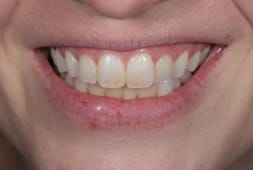
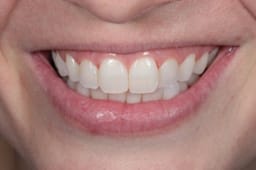
This above patient is in her 30s and can maintain this beautiful and natural white of her teeth with proper hygiene, products and maintenance. With age teeth can become more internally discolored where bleaching can help.
- Bleaching: Bleaching is a much deeper process. Bleaching refers to the use of chemical agents, typically hydrogen peroxide or carbamide peroxide, to lighten the color of the teeth beyond their natural shade. This process can address both surface stains and intrinsic discoloration within the tooth enamel. Even patients with tetracycline stains have responded with dramatically nice results from bleaching properly. There are numerous techniques for bleaching, but the most popular are in-office and at-home.
In-Office Bleaching vs. At-Home Bleaching
When considering bleaching treatments, two primary options are usually discussed: in-office bleaching and at-home bleaching, also known as nightguard vital bleaching.
- In-Office Bleaching: Performed by dental professionals, this method utilizes higher concentrations of bleaching agents, allowing for more immediate and noticeable results. The procedure typically involves:
- Application of a protective barrier to the gums to prevent irritation.
- Application of a bleaching agent to the teeth. Percentages for some power bleaching can be ~25% hydrogen peroxide gel.
- Optional use of light or laser to enhance the bleaching effect.
- ~2hour procedure
Patients often achieve significant whitening in a single session, though multiple visits may be necessary for optimal results. Here is one example of a patient after 1 session of Zoom! In-office whitening.
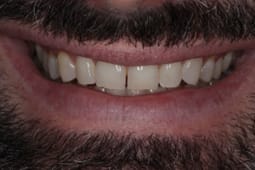
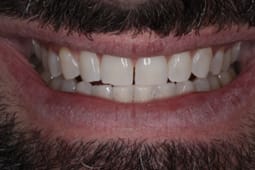
Again, bleaching goes deeper into the teeth. Teeth are semipermeable, so the bleaching agents will go through the enamel and dentin–and studies show it can enter pulp, but does not cause irreversible damage.
- At-Home Bleaching (Nightguard Vital Bleaching): This approach involves the use of custom-fitted trays provided by the dentist, which the patient fills with a lower-concentration bleaching gel and wears for a specified period, sometimes during sleep. The process includes:
- Taking impressions of the patient’s teeth to create custom trays.
- Providing the patient with bleaching gel and detailed instructions for use.
Results are typically seen over a period of weeks to months, depending on the frequency of use and the degree of discoloration.
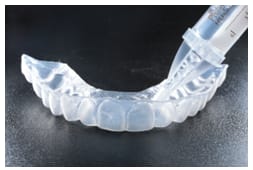
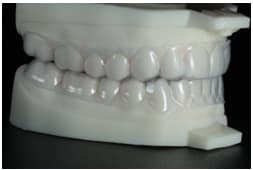
I like to always recommend this technique for patients. It is the most studied and has the highest level of safety. Even if we do an in-office treatment, the patient receives custom trays and bleach for a trial period. This method usually has less sensitivity and the patient can change products or use as trays for sensitivity pastes.
Appropriate Cases for Bleaching and Limitations
I love giving patients my honest opinion if any of these options will work for them. I’ve talked people out of doing bleaching because I did not think it would improve their smile or if it could worsen their dental health. Although there are other reasons I could list, here are some highlights where I think bleaching can help and where it cannot.
Bleaching is suitable for patients with:
• Extrinsic Stains: Caused by external factors such as consumption of coffee, tea, red wine, or tobacco use.
• Intrinsic Stains: Resulting from aging, certain medications, or excessive fluoride exposure during tooth development. Even tetracycline teeth can change!
However, there are limitations and contraindications to consider:
• Restorations: Bleaching agents do not affect the color of dental restorations such as fillings, crowns, or veneers, which may result in color mismatches.
• Tooth Sensitivity: Some patients may experience increased tooth sensitivity or gum irritation during the bleaching process. This sensitivity is reversible and does not harm the tooth. However, it can be some pretty intense sens for 1-2 days, ngl.
• Unrealistic Expectations: It’s important to manage patient expectations, as results can vary based on the initial shade of the teeth and the type of staining.
• Not Suitable for All Patients: Bleaching is not recommended for pregnant or lactating women, children under a certain age, or individuals with certain dental conditions.
Costs for these treatments:
This can vary based on a lot of factors. OTC strips and treatments can work and vary from $20-80. I personally don’t recommend any of these OTC treatments or strips, especially the ones with the lamps. They just are not as effective as professional treatments. Professional treatments also can vary but at-home techniques can be between $200-500 and in-office $400-1k. I don’t charge $1k for my in-office bleaching.
Finally, understanding the differences between whitening and bleaching, as well as the various methods available, allows dental professionals to guide patients toward the most appropriate treatment for their specific needs.
Disclaimer: Results vary and are case dependent. Always seek a professional’s opinion. These are my photos and cases I’m proud to show for educational purpose. Don’t be stealing w/o credit.